Posted on Leave a comment

7 Ways to Turn Your Garage Into a Showroom (Without Breaking the Bank)

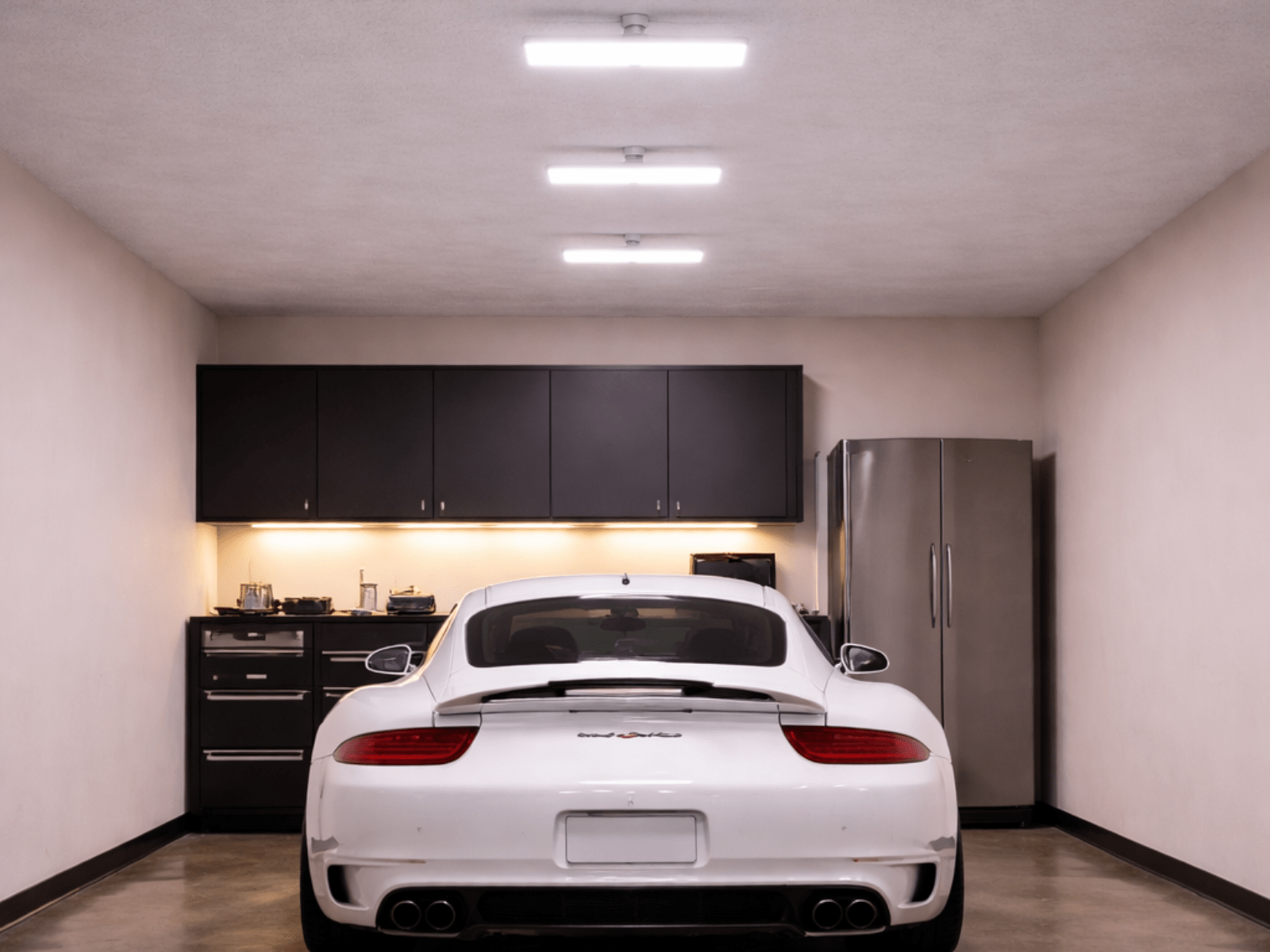
Most garages aren’t far from looking incredible—they’re just missing a few key elements that tie everything together.

The difference between a standard garage and a showroom-style garage isn’t square footage or budget. It’s how intentionally the space is designed.

When done right, even a basic garage can feel clean, high-end, and purpose-built.

1. Start With Lighting (Because Everything Depends On It)

Lighting is the foundation of every great garage makeover.

You can have clean floors, organized tools, and a solid layout—but if your lighting is weak or uneven, the entire space will still feel dull.

Most garages rely on a single overhead fixture or poorly spaced lights, which creates:

  • harsh shadows
  • dim corners
  • uneven reflections on your car

A proper garage lighting setup eliminates those issues by creating consistent, even illumination across the entire space.

Why this matters:
Lighting directly affects how every surface looks—from your paint, to your tools, to your walls. Many of these visual issues start with poor garage lighting ideas and uneven layouts.

Pro tip:
Don’t just add more lights—focus on layout and coverage. Even spacing will outperform random brightness every time.


2. Upgrade Your Floor (It’s Half the Visual Space)

Your garage floor does more than you think—it reflects light and sets the tone for the entire room.

A dull, stained concrete floor absorbs light and makes the space feel darker and older. A clean or coated floor reflects light back into the space, instantly making everything feel brighter and more polished.

Why this matters:
Lighting and flooring work together. Even great lighting will feel underwhelming if your floor is absorbing it.

What works best:

  • Clean, well-maintained concrete (at minimum)
  • Epoxy or coated finishes for maximum reflection

Pro tip:
If your garage still feels dim after upgrading lighting, your floor may be the missing piece.

Garage flooring for showrooms


3. Remove Visual Clutter (This Is Where Most Garages Fail)

Clutter is one of the fastest ways to kill a showroom look.

Even high-end garages lose their impact when tools, boxes, and random items are scattered without structure.

Why this matters:
Visual noise makes a space feel smaller, less intentional, and harder to focus on.

What to do instead:

  • Keep only what you actually use
  • Store everything with a purpose
  • Create open space wherever possible

Pro tip:
A clean garage doesn’t mean empty—it means everything has a place.

Avoid these common garage design mistakes that can make a small garage feel even tighter.


4. Use Wall Storage to Create Structure

Your walls are one of the most underutilized assets in your garage.

When used properly, wall storage:

  • clears your floor
  • organizes your tools
  • creates clean visual lines

Instead of stacking items or using mismatched storage, a structured wall system gives your garage a more intentional, built-out feel.

Why this matters:
A well-organized wall instantly makes the entire garage feel more professional.

Pro tip:
Think of your wall like a display—not just storage. Clean layouts make a huge difference.

Showroom storage options


5. Stick to a Consistent Color Scheme

One of the biggest differences between a “random” garage and a showroom garage is color consistency.

When too many colors compete—different storage bins, tools, walls, and finishes—the space feels chaotic.

Why this matters:
A consistent color palette creates a sense of cohesion and control.

What works best:

  • Neutral bases (black, gray, white)
  • Minimal accent colors
  • Matching finishes where possible

Pro tip:
If something doesn’t match your overall look, it will stand out more than you think.


6. Create a Focal Point (Give the Eye Somewhere to Land)

Every well-designed garage has a focal point—something that immediately draws attention.

This could be:

  • your car
  • a feature wall
  • a clean lighting layout
  • a branded or styled section

Without a focal point, the space can feel flat and forgettable.

Why this matters:
People remember what stands out. A focal point gives your garage identity.

Pro tip:
Lighting is often what creates the strongest focal point—especially when it’s clean and structured.


7. Keep It Minimal (This Is What Separates Good From Great)

The best garage makeover ideas all come back to one principle: restraint.

Adding more doesn’t improve your garage—refining it does.

Especially when you’re a smaller space, avoid these smaller garage space mistakes when designing. 

Why this matters:
Minimal setups feel more intentional, more premium, and easier to maintain.

What to focus on:

  • fewer, better elements
  • clean spacing
  • strong visual flow

Pro tip:
If your garage feels “off,” try removing something before adding anything new.


Final Thought

A showroom-style garage isn’t built by accident—it’s the result of a few key decisions done right.

And almost every one of those decisions is influenced by how your lighting interacts with the space.

Get that right, and everything else starts to fall into place.

If you’re serious about upgrading your garage, start with lighting designed specifically for this kind of setup— Check out our options here

Posted on Leave a comment

Small Garage? Here’s How to Make It Look Bigger, Brighter, and Better

A small garage doesn’t have to feel cramped or limiting.

In fact, some of the best-looking garages are smaller spaces that have been designed correctly.

The difference isn’t size—it’s how the space is structured, how light is used, and how visual clutter is controlled.

When those three things are handled properly, even a tight garage can feel open, clean, and intentionally built.

1. Use Bright, Even Lighting to Eliminate Shadow Zones

The fastest way to make a small garage feel even smaller is uneven lighting.

Most garages rely on a single light source, which creates:

  • dark corners
  • heavy shadows
  • inconsistent visibility

These shadows visually “shrink” the space by breaking it into sections.

When lighting is evenly distributed across the ceiling, those shadow zones disappear—and the entire garage immediately feels more open.

Why this matters:
Your eyes interpret brightness as space. The more evenly lit the room is, the larger it feels.

How to approach it:

  • aim for full coverage, not just brightness in one area
  • eliminate dark edges and corners
  • keep lighting consistent from front to back

Pro tip:
If your garage looks smaller at night than during the day, your lighting layout is the issue—not the space itself.

The foundation of any upgrade starts with strong garage lighting ideas, especially in smaller spaces.


2. Build Vertically (Not Outward)

In small garages, floor space is your most valuable asset.

One of the most common mistakes is using that space for storage—stacking bins, tools, and equipment outward instead of upward.

Why this matters:
Anything sitting on the floor reduces visible space, which makes the garage feel tighter and more cluttered.

What works better:

  • vertical wall storage
  • mounted systems
  • keeping the floor as open as possible

Real impact:
When your floor is clear, your garage instantly feels larger—even if nothing else changes.

Pro tip:
If you can see more floor, your garage will always feel bigger.

small garage storage vertical wall organization


3. Simplify Your Color Palette (Visual Noise Shrinks Space)

Color plays a bigger role in perception than most people realize.

When a garage has too many competing colors—tools, bins, walls, flooring—it creates visual noise, which makes the space feel chaotic and smaller.

Why this matters:
Your brain has to process more information, which makes the space feel crowded.

What works best:

  • neutral base tones (black, gray, white)
  • minimal accent colors
  • consistency across surfaces

Real impact:
A consistent color palette makes the garage feel calmer, cleaner, and more spacious.

Pro tip:
If everything stands out, nothing looks intentional.


4. Use Reflective Surfaces to Amplify Light

Lighting alone doesn’t determine brightness—your surfaces play a major role.

Matte, dark, or unfinished surfaces absorb light, while reflective surfaces bounce it back into the space.

Why this matters:
In a small garage, you need to maximize every bit of light you have.

What helps most:

  • clean or coated floors
  • smooth wall finishes
  • organized, uncluttered surfaces

Real impact:
Reflective environments can make a garage feel significantly brighter without adding more fixtures.

Pro tip:
If your lighting feels underwhelming, your surfaces may be absorbing it instead of reflecting it.

small garage lighting setup bright even lighting


5. Keep the Floor Open (This Changes Everything)

This is one of the simplest—but most powerful—garage space optimization strategies.

When the floor is crowded, the garage feels tight. When the floor is open, the garage feels larger.

Why this works:
Open floor space creates uninterrupted visual flow, which makes the room feel bigger than it actually is.

What to avoid:

  • loose items sitting around
  • bulky storage taking up ground space
  • unnecessary equipment

Real impact:
Clearing the floor often makes a bigger difference than adding new features.

Pro tip:
Before buying anything new, remove or relocate what’s already taking up space.

Avoid these common garage design mistakes that can make a small garage feel even tighter.


6. Add Depth With Layered Lighting

Flat lighting makes small spaces feel boxed in.

Layered lighting—using multiple levels or angles—adds depth and dimension, which makes the garage feel more dynamic.

Why this matters:
Depth tricks your eye into perceiving more space.

How it works:

  • overhead lighting for full coverage
  • additional lighting to create contrast and visual separation

Real impact:
Instead of feeling like a single flat room, your garage starts to feel more expansive and designed.

Pro tip:
If everything is lit the same way, the space will feel flat. Variation creates dimension.


7. Design With Intent (Not Just Function)

Most small garages feel cramped because they’re designed only for function—not for how they look or feel.

A well-designed garage considers:

  • spacing
  • alignment
  • visual balance

Why this matters:
Intentional design creates structure, and structure makes a space feel controlled and open.

What this looks like in practice:

  • aligned storage
  • consistent lighting layout
  • clean, repeatable patterns

Pro tip:
A small garage that’s intentionally designed will always feel bigger than a large one that isn’t.

If you’re planning a full upgrade, this garage checklist will help you avoid many costly mistakes.

small garage lighting setup bright even lighting


Final Thought

A small garage isn’t a limitation—it’s a design challenge.

And when it’s done right, it often ends up looking cleaner, sharper, and more refined than larger spaces.

In almost every case, the turning point comes down to how lighting, layout, and visual control are handled together.

If you’re upgrading a smaller space, start with lighting that’s designed to maximize coverage and eliminate shadows

Posted on Leave a comment

Top 5 Garage Design Mistakes That Are Ruining Your Space (And How to Fix Them)

Most garages don’t look bad because of what they’re missing—they look bad because of a few critical mistakes that quietly ruin the entire space. You can spend money on upgrades, tools, or storage, but if these foundational issues aren’t addressed first, your garage will never feel clean, cohesive, or “finished.” The good news: once you understand what’s holding your setup back, the fixes are straightforward—and the results are immediate.

1. Poor or Uneven Lighting (The #1 Problem in Most Garages)

Lighting is the most common—and most damaging—mistake in garage design.

Most garages rely on a single overhead bulb or poorly spaced fixtures. This creates:

  • dark corners
  • harsh shadows
  • inconsistent visibility across the space

Even if everything else is dialed in, bad lighting will make your garage feel dull and incomplete.

Why this matters:
Lighting controls how every surface is perceived. Your car’s finish, your walls, your tools—all of it depends on how light hits them.

Uneven lighting breaks that consistency and instantly lowers the overall quality of the space.

How to fix it:

  • Focus on even light distribution across the entire ceiling
  • Eliminate shadow zones
  • Use lighting designed to fully cover the space—not just parts of it

Pro tip:
If your garage looks different depending on where you stand, your lighting layout isn’t working.

garage lighting mistakes uneven lighting dark garage setup


2. Treating Storage as “Out of Sight, Out of Mind”

A lot of garages technically have storage—but it’s not organized in a way that improves the space.

Stacked bins, random shelves, and overloaded corners create visual clutter, even if everything is “put away.”

Why this matters:
Your garage isn’t just functional—it’s visual. Disorganized storage breaks the clean lines that make a garage feel intentional.

What happens when this goes wrong:

  • the space feels smaller than it is
  • your eye has nowhere to settle
  • everything starts to feel chaotic

How to fix it:

  • move storage vertically instead of stacking outward
  • group similar items together
  • create clean, repeatable patterns (not randomness)

Pro tip:
If your storage draws attention to itself, it’s working against your design—not helping it.


3. No Clear Design Direction (Mixing Too Many Styles)

This is one of the most overlooked garage design mistakes.

A garage with no clear direction—mixing colors, materials, and styles—ends up feeling scattered and unfinished, even if each individual piece is high quality.

Why this matters:
Consistency is what creates a premium look. When everything feels like it belongs together, the space feels intentional.

Common issues:

  • mismatched colors (tools, bins, walls, lighting)
  • mixing modern and outdated elements
  • no defined “look” or theme

How to fix it:

  • choose a base palette (black, gray, white works best)
  • limit accent colors
  • keep finishes consistent across the space

Pro tip:
Before adding anything new, ask: “Does this match the rest of the garage?” If not, it will stand out in the wrong way.

Many of these issues start with poor garage lighting ideas and uneven layouts.

garage lighting mistakes uneven lighting dark garage setup


4. Ignoring the Floor (The Most Underrated Element)

The garage floor is one of the largest visible surfaces in the entire space—and one of the most neglected.

Stained, cracked, or dull concrete absorbs light and makes everything feel darker and less refined.

Why this matters:
Your floor directly affects how light reflects throughout the garage. A poor floor finish can cancel out even a strong lighting setup.

What happens when this is ignored:

  • lighting feels weaker than it actually is
  • the space looks older and less maintained
  • reflections (especially from your car) look dull

How to fix it:

  • deep clean as a starting point
  • consider coatings that reflect light and improve durability

Pro tip:
If your lighting upgrade didn’t have the impact you expected, your floor is often the reason.


5. Using Low-Quality Fixtures and Materials

This mistake is subtle—but it makes a big difference.

Cheap lighting, weak materials, and inconsistent finishes tend to stand out immediately, especially once everything else is cleaned up.

Why this matters:
As your garage improves, the low-quality elements become more noticeable—not less.

garage lighting mistakes uneven lighting dark garage setup

What happens:

  • lighting looks uneven or underpowered
  • materials wear out faster
  • the space never feels fully “finished”

How to fix it:

  • prioritize fewer, higher-quality upgrades
  • focus on elements that impact the entire space (especially lighting)
  • choose products designed specifically for garage environments

Pro tip:
Upgrading one key element properly will do more for your garage than multiple cheap upgrades combined.


Final Thought

Most garage upgrades don’t fail because of effort—they fail because the fundamentals weren’t handled first.

When you fix the core issues—especially lighting, layout, and consistency—everything else starts to fall into place.

A well-designed garage doesn’t just look better. It feels better to be in, work in, and show off.

If you’re planning a full upgrade, these garage makeover ideas will help you avoid these mistakes entirely.

The best setups aren’t just bright—they’re intentional. The difference comes down to choosing lighting designed specifically for garage environments.

If you’re looking to fix the foundation of your setup, start with lighting that’s built specifically for garages

Posted on Leave a comment

Garage Life: April 2026

Is Your Garage Ready for the EV Revolution? How to Prepare for Home Electric Vehicle Charging

The surge in electric vehicles (EVs) is transforming how homeowners think about their garages. If you’re considering an EV or already own one, prepping your garage for charging is crucial. Here’s how to get your space ready for the future of driving—and why lighting matters more than you might think.


1. Plan Your Charging Setup

  • Choose the Right Charger: Most EVs come with a Level 1 charger, but a Level 2 charger (240V) is recommended for faster charging at home.
  • Locate the Outlet: Position your charging station where it’s convenient to plug in, with easy cable management and minimal tripping hazards.
  • Hire a Pro (if needed): For 240V outlets, a licensed electrician is required for installation and safety compliance.

2. Rethink Garage Lighting

  • Why It Matters: Proper lighting is essential for nighttime charging, monitoring charge status, and safely moving around your vehicle.

You can also follow a full garage setup checklist to make sure nothing is missed.

  • Upgrade to High-Output LED: Commercial-grade LED fixtures provide bright, even illumination—no more dark corners or dim bulbs.
  • Designed for Garages: Surface-mounted linear highbay fixtures are ideal for single-car, two-car, or three-car setups. Motion sensors and remote controls add convenience and energy efficiency.

Above: Example of a garage ready for EV charging, featuring bright, high-output LED lighting for maximum visibility and safety.


3. Organize for Efficiency

  • Cable Management: Use wall hooks or retractable systems to keep charging cables tidy.
  • Clear the Clutter: Open floor space makes parking and charging easier—and reduces fire risk.
  • Add Storage: Cabinets or shelves keep tools and accessories out of the way, maximizing usable space.

A strong upgrade always starts with your garage lighting ideas before moving into layout and finishes.


4. Safety & Compliance

  • Check for ETL Listing: Ensure all electrical products, including lighting, are ETL listed for safety in garage environments.
  • Follow Local Codes: Always comply with local building and electrical codes for new installations.

Ready to Upgrade?

A well-lit, organized garage makes EV ownership easier and safer. Explore high-output garage lighting packages designed for easy DIY installation—so you can focus on the road ahead, not fumbling in the dark.


Want to see real installs? Browse our gallery for customer photos and inspiration. Ready to upgrade? Contact us for the perfect lighting package for your garage.

Click For Our Showroom

Posted on Leave a comment

10 Garage Lighting Ideas That Instantly Upgrade Your Space

If your garage feels dull or unfinished, lighting is usually the missing piece. The right setup doesn’t just improve visibility—it completely transforms how your space looks and feels.

1. Structured Ceiling Lighting Layouts

A structured lighting layout (clean, evenly spaced patterns across the ceiling) creates a polished, intentional look.

This matters because random or uneven lighting creates shadows and visual imbalance, which makes even a clean garage feel cluttered.

When lighting is laid out in a consistent pattern, it:

  • eliminates dark zones
  • improves visibility across the entire space
  • creates that “showroom” effect people notice immediately

Pro tip:
Measure your ceiling and plan spacing before installing anything. Symmetry matters more than people expect.


2. High-Output LED Fixtures

Not all LED lighting is equal. Low-output fixtures often look bright at first—but once installed, they leave dull areas and weak coverage.

A properly lit garage should feel evenly illuminated from corner to corner—not spotlighted.

Higher-output lighting:

  • reduces eye strain
  • improves visibility when working
  • enhances reflections on your car and floor

Pro tip:
Look at total light output (lumens), not just wattage. That’s where most people go wrong.


3. Layered Lighting (Not Just Overhead)

One of the biggest mistakes is relying only on ceiling lights.

Layered lighting—like adding illumination under cabinets or along walls—creates depth and makes the space feel intentional.

Without it, garages tend to look flat and unfinished.

Pro tip:
Think in layers: overhead for visibility, lower lighting for atmosphere and detail.


4. Wall-Focused Lighting

Lighting that hits your walls instead of just the floor changes how the entire room feels.

It:

  • highlights textures
  • makes the space feel wider
  • removes the “boxy” look most garages have

Pro tip:
If your walls look dull, your lighting is probably too vertical. Adjust angles or placement.


5. Even Light Distribution

This is where most garages fail.

You can have bright lights—but if they’re poorly spaced, you’ll still get:

  • dark corners
  • harsh shadows
  • uneven visibility

Even distribution is what creates that clean, professional finish.

Pro tip:
Stand in different parts of your garage and look for shadow zones. That’s where your layout needs work.

A strong upgrade always starts with your garage lighting ideas before moving into layout and finishes.


6. Color Temperature (Why It Matters More Than You Think)

Lighting color dramatically affects how your garage feels.

Warm lighting (yellow tones):

  • feels dimmer
  • makes the space look dated

Cool white lighting:

  • feels brighter
  • makes surfaces look cleaner
  • enhances contrast and detail

Pro tip:
If your garage doesn’t feel “crisp,” your color temperature is likely too warm.


7. Highlight Zones for Visual Impact

A standout garage doesn’t treat every area the same.

Highlighting specific zones—like your car or workbench—adds depth and focus.

This is what creates that “designed” look instead of just “lit.”

Pro tip:
If everything is equally bright, nothing stands out. Contrast creates interest.


8. Smart Lighting Control

Being able to adjust brightness changes how you use your space.

Bright for working. Slightly dimmed for a cleaner, ambient look.

Pro tip:
Even a simple dimmer setup can dramatically improve how your garage feels at night.


9. Reflective Surfaces + Lighting

Lighting doesn’t work alone—it interacts with your surfaces.

Glossy or coated floors reflect light back into the space, doubling the visual effect.

Pro tip:
If your lighting feels weak, your surfaces might be absorbing it instead of reflecting it.


10. Designing With the End Result in Mind

The best garages don’t just “add lights”—they’re designed around how the space should feel.

Clean. Bright. Intentional.

That only happens when lighting is treated as a core part of the build—not an afterthought.

You can also follow a full garage setup checklist to make sure nothing is missed.

The best setups aren’t just bright—they’re intentional. The difference comes down to choosing lighting designed specifically for garage environments.

Explore lighting designed for real garage builds here

Posted on Leave a comment

The Ultimate Guide to Garage Lighting Ideas (2026): Design, Layout, and Setup

Most people underestimate how much lighting affects their garage.

They focus on tools, storage, or flooring—but ignore the one thing that controls how everything looks: light.

The truth is simple:

The difference between a basic garage and a showroom-level setup almost always comes down to lighting.

The same garage—with the same layout—can feel:

dark and cluttered or clean, sharp, and high-end

…depending entirely on how the lighting is designed.

This guide breaks down everything you need to know—from layout to brightness to design—so you can build a garage that actually looks and feels complete.

💡 1. What Makes a Great Garage Lighting Setup?

A great garage lighting setup isn’t just about brightness—it’s about control and consistency.

Most garages fail because they rely on:

  • one central light source
  • uneven fixture placement
  • low-output lighting

This creates shadow zones and visual inconsistency.


🔑 The 3 Things Every Setup Needs

1. Even Light Distribution

Light should cover the entire garage—not just the center.

2. Minimal Shadows

Shadows make your garage feel smaller and less refined.

3. Consistent Brightness

No harsh bright spots or dim corners.


Expert Insight:
Your goal isn’t to “light the garage”—it’s to eliminate contrast across the entire space.


🧱 2. Garage Lighting Layout (Where Most People Go Wrong)

If there’s one place people mess up—it’s layout.

You can have great lights, but if they’re poorly arranged, the result will still feel off.


🔲 Structured Layout vs Random Placement

A structured layout:

  • creates symmetry
  • improves visual flow
  • eliminates dead zones

Random placement:

  • causes uneven lighting
  • creates visual imbalance

📐 How to Think About Layout

Instead of:

“Where can I fit lights?”

Think:

“How do I evenly cover the entire ceiling?”


Best Practices:

  • space lights evenly
  • align them in clean patterns
  • avoid clustering in one area

Pro tip:
Stand in your garage and look for shadow zones—those are layout failures, not brightness issues.

And thinking about a garage makeover?  This guide will walk you through options.  

modern garage LED lighting setup with even ceiling layout


💡 3. Choosing the Best Garage Lighting Type

Not all lighting works well in a garage environment.

The key is choosing lighting that provides:

  • wide coverage
  • consistent brightness
  • clean visual output

🔍 What to Look For in Garage LED Lighting

1. High Lumen Output

More lumens = better coverage.

2. Wide Beam Spread

Prevents spotlighting and uneven light.

3. Clean Light Color

Cool white lighting enhances clarity and detail.


Important:
Wattage doesn’t equal brightness—lumens do.

Garage lighting tips and tricks


🎨 4. Color Temperature (Why Your Garage Might Look Dull)

Color temperature has a massive impact on how your garage feels.


Warm vs Cool Lighting

Warm Light (Yellow Tones)

  • feels dimmer
  • looks outdated
  • reduces clarity

Cool White Light

  • looks brighter
  • feels cleaner
  • enhances reflections

Recommended Range:

👉 5000K–6500K


Pro tip:
If your garage doesn’t feel “crisp,” your lighting color is likely too warm.

modern garage LED lighting setup with even ceiling layout


🧠 5. Layered Lighting (The Secret to a High-End Look)

Most garages rely on a single lighting layer—overhead.

That’s why they feel flat.


What Is Layered Lighting?

Using multiple light sources at different levels:

  • ceiling lighting (main coverage)
  • lower or directional lighting (depth and focus)

Why It Works:

  • adds dimension
  • creates contrast
  • makes the space feel designed

Expert Insight:
Flat lighting makes your garage look like storage. Layered lighting makes it feel like a showroom.  As in the image below, the upper “main” lighting lights the room, but the side lighting “accents” the room.  

Garage lighting and design

If you’re looking for amazing lighting options for your garage and looking to take your garage to the next level, check out the Lit Garages lighting packages here.  


🚗 6. Lighting for Visual Impact (Making Your Garage Stand Out)

Lighting isn’t just functional—it’s visual.

A well-lit garage draws attention to what matters.


Highlight Zones

Use lighting to emphasize:

  • your car
  • workbench areas
  • feature walls

Why This Matters:

If everything is equally lit, nothing stands out.


Pro tip:
Create contrast—not everything should have the same intensity.

modern garage LED lighting setup with even ceiling layout
Lit Garages 2 car garage product image

🪞 7. How Surfaces Affect Lighting

Lighting doesn’t work alone—it interacts with your environment.


Reflective vs Absorbing Surfaces

Reflective Surfaces:

  • amplify light
  • make the space feel brighter
  • increase depth

Absorbing Surfaces:

  • dull lighting
  • reduce visibility
  • make the space feel smaller

What Helps Most:

  • clean floors
  • smooth wall finishes
  • uncluttered surfaces

Pro tip:
If your lighting feels weak, your surfaces may be working against it.


🧰 8. Common Garage Lighting Mistakes (Avoid These)


❌ Uneven Layout

Leads to shadows and imbalance

❌ Not Enough Coverage

Creates dim zones

❌ Wrong Color Temperature

Makes the garage feel outdated

❌ Treating Lighting as an Afterthought

Instead of a foundation


Expert Insight:
Most lighting problems aren’t caused by bad products—they’re caused by poor planning.

Take a look at these common garage design mistakes and how to avoid them.

garage lighting and cool designs


🧱 9. Designing Your Garage Around Lighting

Here’s where most people get it backwards.

They:

  • build the garage
  • then add lighting

The better approach:

Design your garage with lighting as the foundation.


Why This Works:

  • everything aligns visually
  • no retrofitting issues
  • better overall result

🔥 10. What a Complete Garage Lighting Setup Looks Like

A complete setup includes:

  • full ceiling coverage
  • consistent brightness
  • clean layout
  • minimal shadows
  • intentional design

When all of these come together, your garage:

  • looks bigger
  • feels cleaner
  • stands out immediately

Check out the checklist we created for making an amazing garage

modern garage LED lighting setup with even ceiling layout


🧠 Final Thoughts: Why Lighting Is the First Upgrade You Should Make

Every major garage transformation starts with lighting.

Because once lighting is right:

  • everything else looks better
  • upgrades feel more impactful
  • the space feels complete